


- Steampunk Interior Design: What Happens When Victorian Inventors Meet Your Living Room - September 6, 2025
- Tuscan Interior Design: Creating That Effortless Italian Villa Look - September 2, 2025
- The Real Deal on Eclectic Interior Design (From Someone Who’s Actually Done It) - September 1, 2025
Table of Contents
Back in 2009, I walked into this Manhattan apartment that completely changed how I think about Art Deco. The owner had inherited it from her grandmother and wanted to rip everything out. “It’s so dated,” she told me. But those zigzag mirrors? That brass bar cart? I could see the potential even if she couldn’t.
Most people think Art Deco means stuffy museum pieces or over-the-top Gatsby parties. But after fifteen years working with this style, I can tell you that’s not true. When you get it right, Art Deco feels modern, livable, and yes – sophisticated without being pretentious.
What Actually Makes Art Deco Different?
Art Deco came from the 1920s obsession with progress and luxury. People were excited about skyscrapers, technology, jazz music – everything felt possible. Designers got tired of Victorian fussiness and wanted something that looked like it belonged in the future.
The style got its name from a big design exhibition in Paris in 1925, but it had been building momentum since around 1910. Designers were basically rebelling against all the fussy Victorian decorating their parents loved. They wanted clean lines, expensive materials, and patterns that looked like they belonged in the modern world.
I had a client recently who put it perfectly: “I want my house to feel like I’m successful, but not like I’m trying too hard.” That’s Art Deco in a nutshell.
The Basics You Need to Get Right
Patterns That Don’t Drive You Crazy
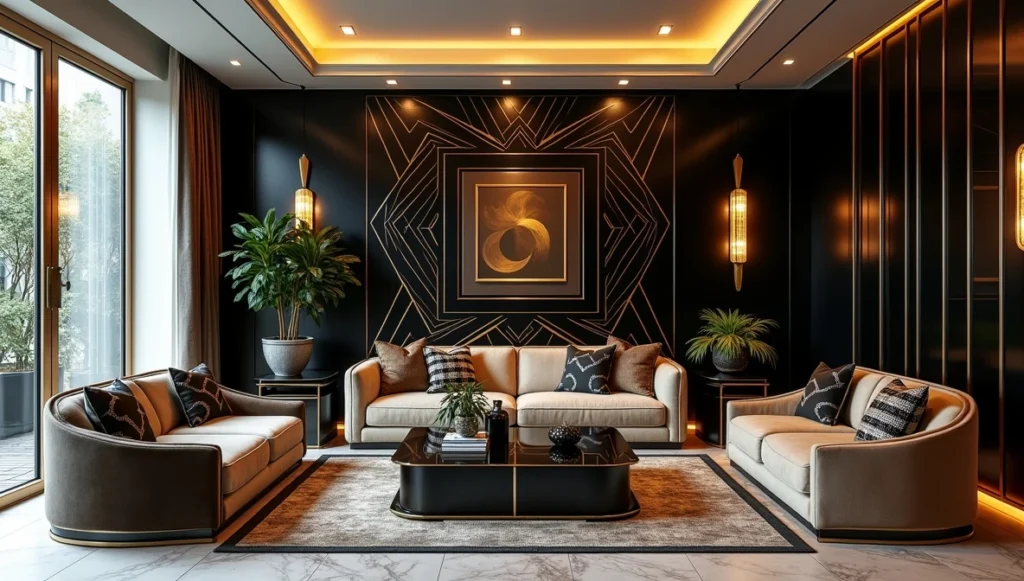
Here’s what I wish someone had told me when I started: geometric patterns are everywhere in Art Deco, but you can’t just slap them on everything. Early in my career, I made this mistake on a living room project. Chevron wallpaper, zigzag rugs, sunburst mirrors – it looked like a casino, not a home.
Now I stick to what I call the “one star, many extras” rule. Pick one big geometric statement – maybe a killer rug or an accent wall – then let everything else play backup. The patterns should feel intentional, not overwhelming. Here’s the living room I delivered to a client recently. Isn’t the accent wall stunning? Everything around it seamlessly blends with it.
Materials Worth the Investment
Art Deco doesn’t mess around with cheap finishes. We’re talking marble, brass, chrome, exotic woods, lots of mirror work. I know it sounds expensive, but here’s the thing – you don’t need to do everything at once. Start with hardware and lighting, then build from there.
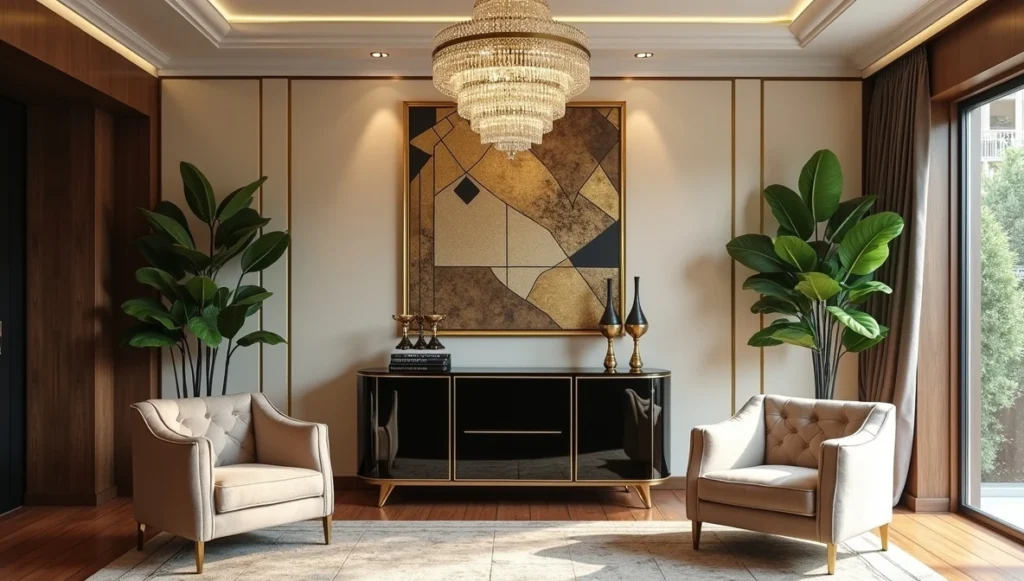
One thing that surprises people is how well different metals work together in this style. That brass picture frame with a black lacquer console underneath? It shouldn’t work, but it totally does. Take a look.
Colors That Actually Make Sense
Everyone thinks Art Deco is just black, white, and gold. Sure, that combination looks great, but you’re missing out if you stop there. Some of my favorite projects have used deep jewel tones – emerald, sapphire, burgundy – with metallic accents and cream backgrounds.
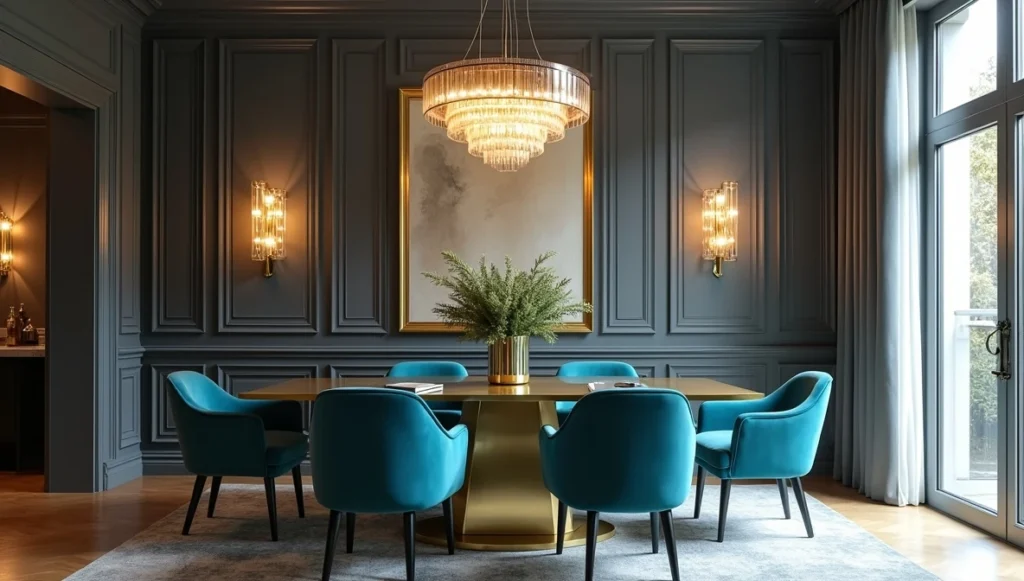
I just finished a dining room with charcoal walls and this incredible peacock blue velvet on the chairs. The brass dining table tied it all together. It was dramatic without being over-the-top, which is exactly what you want.
Room-by-Room Breakdown
Living Rooms
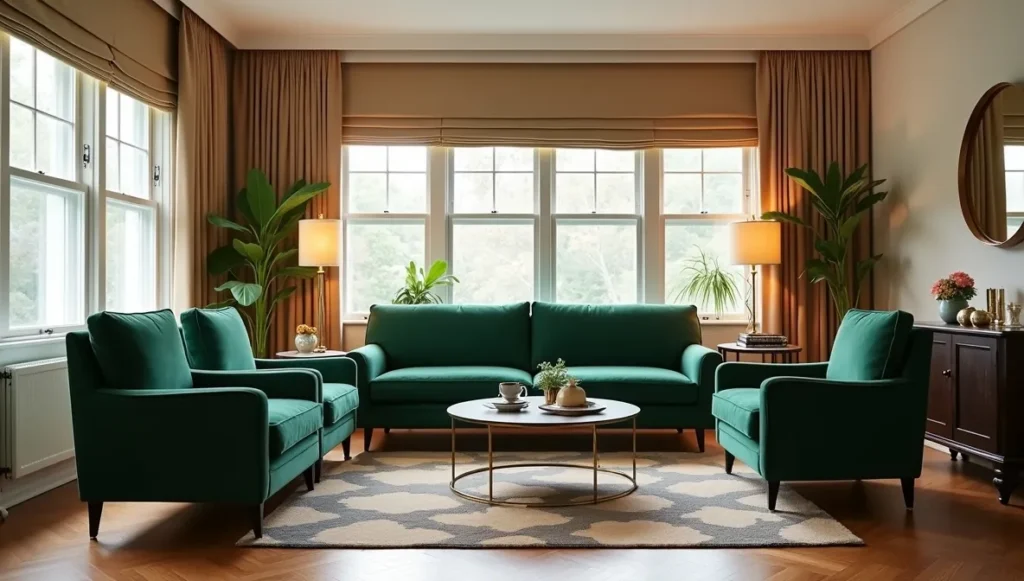
Start with your sofa – look for angular arms in rich velvet. Build around it with a coffee table that has brass or chrome legs. Skip the big sectional and create smaller conversation areas instead. Art Deco works better with intimate groupings. And please, no fancy curtains. Clean Roman shades or simple panels work so much better.
Bedrooms
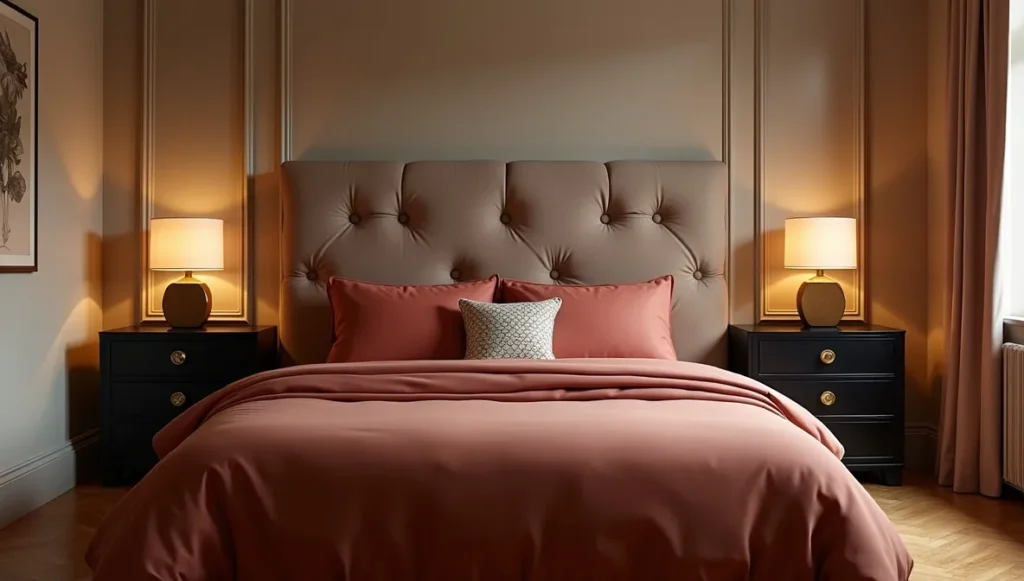
Think boutique hotel, not museum. Upholstered headboards with geometric shapes are your friend. Keep the bedding solid-colored and luxurious – silk or really good cotton. One geometric throw pillow is enough pattern. Black lacquer nightstands with brass pulls never go wrong.
Kitchens and Dining Rooms
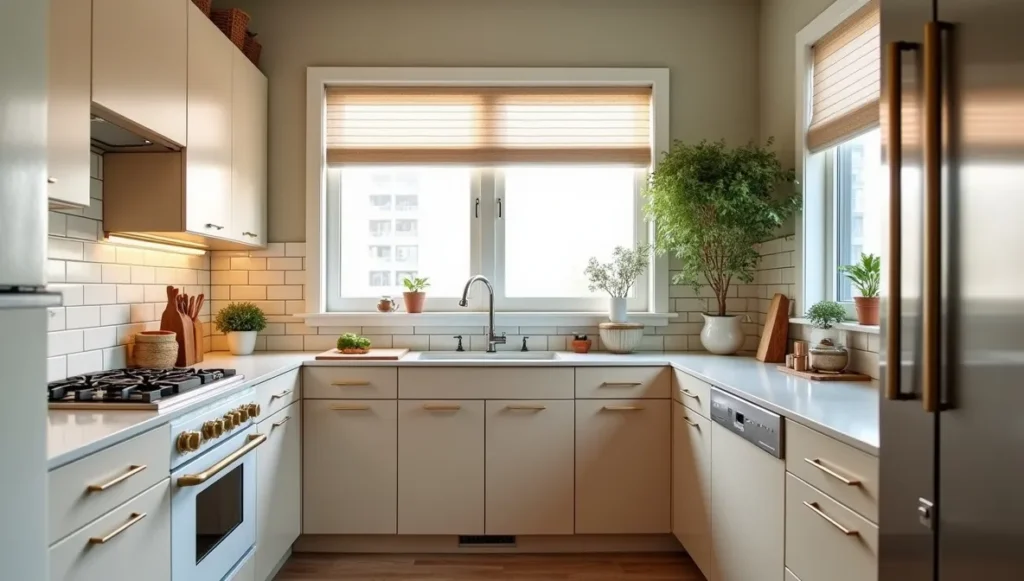
Kitchens are tricky because you need modern function with vintage style. Focus on cabinet hardware – geometric pulls in brass or chrome make a huge difference. For backsplashes, try subway tiles in herringbone patterns with dark grout.
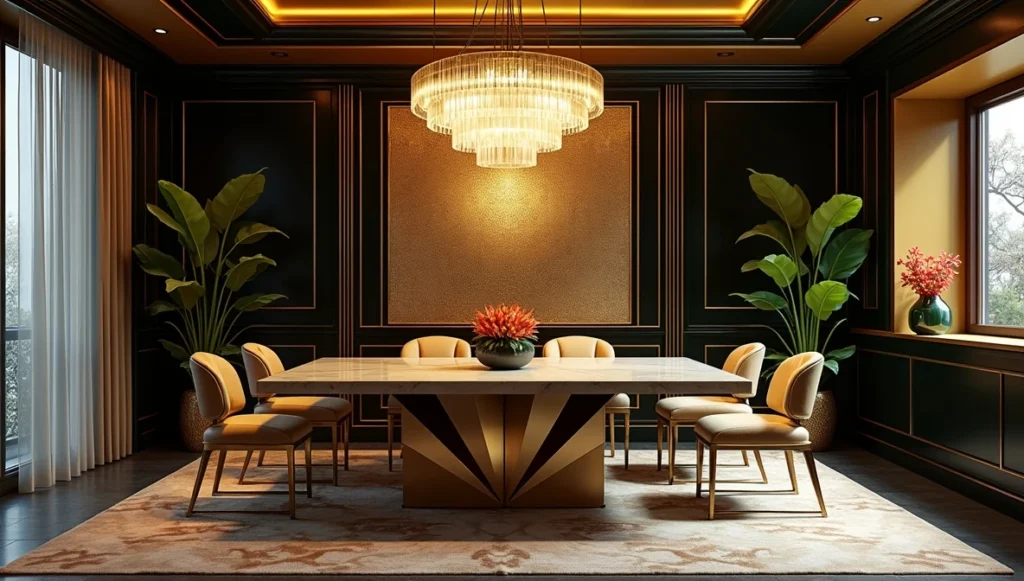
Dining rooms are where you can really go for it. Tables with geometric metal bases, dramatic lighting, maybe some metallic wallpaper if you’re feeling bold. This is the one room where “too much” is almost impossible.
Bathrooms
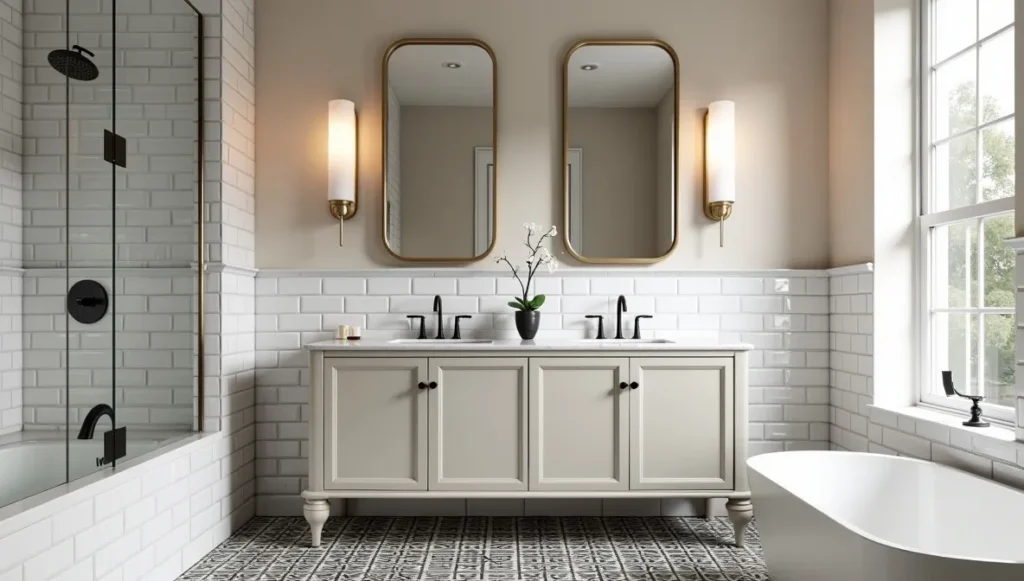
Make it feel like a spa. Geometric floor tiles, vanities that look like furniture pieces, frosted glass sconces flanking mirrors. Subway tiles work great here too, especially with contrasting grout that creates pattern without being busy.
Home Offices
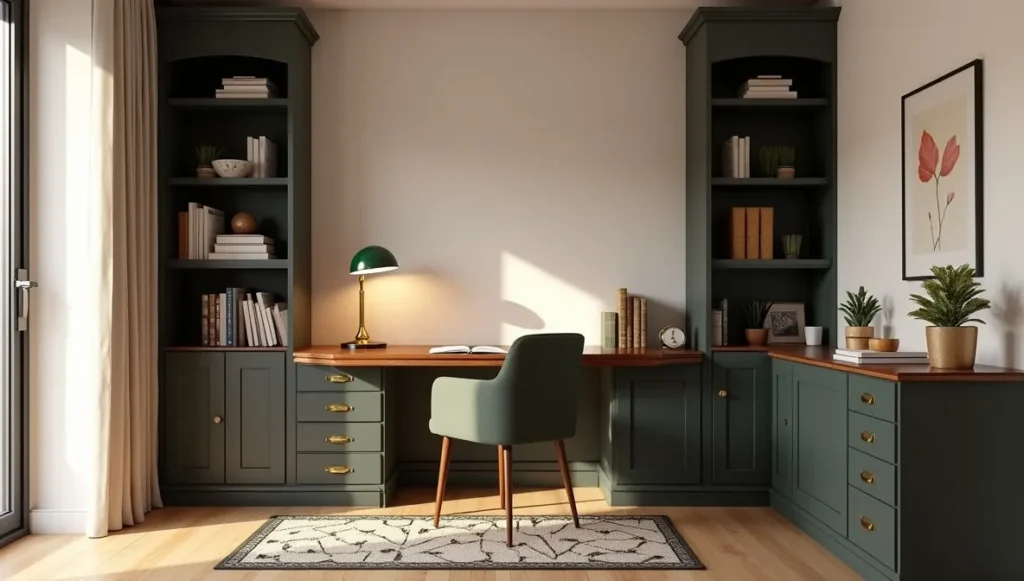
Your workspace should feel important and inspiring. Look for desks with geometric bases – dark wood with brass accents works great. Those classic brass banker’s lamps with green glass shades are perfect for task lighting while staying true to the style. Built-in bookshelves with brass hardware make the whole space feel more substantial.
Kids’ Rooms
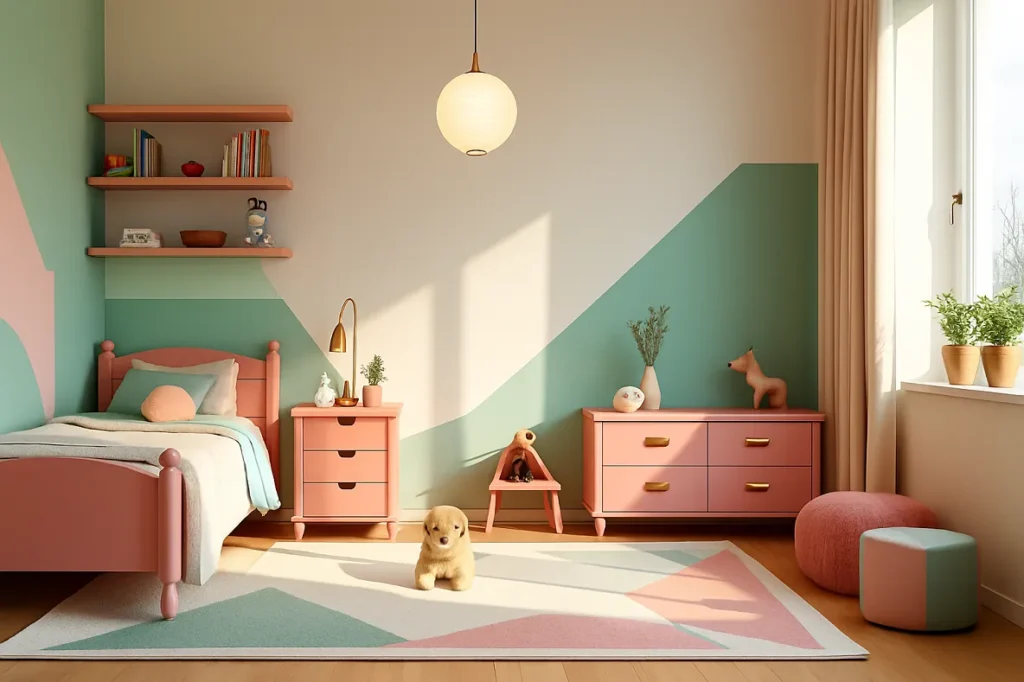
Here’s where people think Art Deco won’t work, but I’ve done some amazing children’s spaces with this style. The trick is adapting it – use softer geometric patterns in playful colors like mint green with gold or coral with brass. Safety first though – rounded corners on furniture and sturdy materials. Geometric area rugs are perfect for play areas, and pendant lights that cast fun shadow patterns on the ceiling make great nightlights.
Making It Work in Real Life
Start Small
You don’t need to renovate everything. Swap out a coffee table, add some geometric throw pillows, get a sunburst mirror. See how it feels before you commit to bigger changes.
Lighting Is Everything
Art Deco produced some of the coolest light fixtures ever made. Even if you do nothing else, updating your lighting to stepped metal pendants or frosted glass sconces will completely change how a room feels.
Mix It Up
Art Deco plays well with other styles when you’re smart about it. I’ve mixed it with mid-century modern, contemporary pieces, even some traditional furniture. The key is finding common threads – maybe it’s brass throughout, or the way geometric patterns echo clean lines from other periods.
What Usually Goes Wrong
The Movie Set Problem
Don’t turn your house into a Great Gatsby theme party. Yes, it should feel glamorous, but you still need to live there. Choose pieces that look good AND work for your actual life.
Going Overboard
Art Deco is strong medicine – a little goes a long way. I’ve seen people put geometric patterns on every surface and the result looks more like a fun house than a home. Pick your moments.
Why It Still Works
After working with Art Deco for years, I think it lasts because it came from such an optimistic time. People in the 1920s genuinely believed design and technology could make everything better and more beautiful.
That optimism translates perfectly to modern homes. In a world that often feels chaotic, there’s something deeply satisfying about the order and quality that Art Deco represents. Plus, let’s be honest – it photographs incredibly well, which doesn’t hurt in our Instagram world.
The best Art Deco interiors I’ve designed feel both timeless and totally current. They respect the history of the style while serving real people’s actual needs. When you get that balance right – between past and present, drama and livability, luxury and comfort – you end up with spaces that people genuinely love living in.
And after fifteen years of doing this work, helping people create homes they’re excited to come back to every day, that’s really what it’s all about.