


- Steampunk Interior Design: What Happens When Victorian Inventors Meet Your Living Room - September 6, 2025
- Tuscan Interior Design: Creating That Effortless Italian Villa Look - September 2, 2025
- The Real Deal on Eclectic Interior Design (From Someone Who’s Actually Done It) - September 1, 2025
Table of Contents
Twenty years ago, I thought I had interior design figured out. Clean lines, matching sets, everything coordinated. Then I met Mrs. Ellsworth, a retired art teacher who wanted her living room to showcase her grandmother’s Victorian settee alongside her son’s modern sculptures and her own collection of Moroccan textiles. I almost turned down the project. Thank God I didn’t.
What I’ve Learned About Making Eclectic Actually Work
Here’s what nobody tells you: eclectic isn’t about collecting random beautiful things and hoping they get along. It’s more like hosting a dinner party where you introduce people who seem completely different but end up having the most fascinating conversations.
The whole point is creating spaces that feel collected over time, not decorated in a weekend. Mrs. Ellsworth’s room taught me that when you find the right connecting thread, as in her case, it was warm jewel tones – pieces from completely different worlds can become best friends.
The Stuff That Actually Matters
Color (Your Best Friend or Worst Enemy)
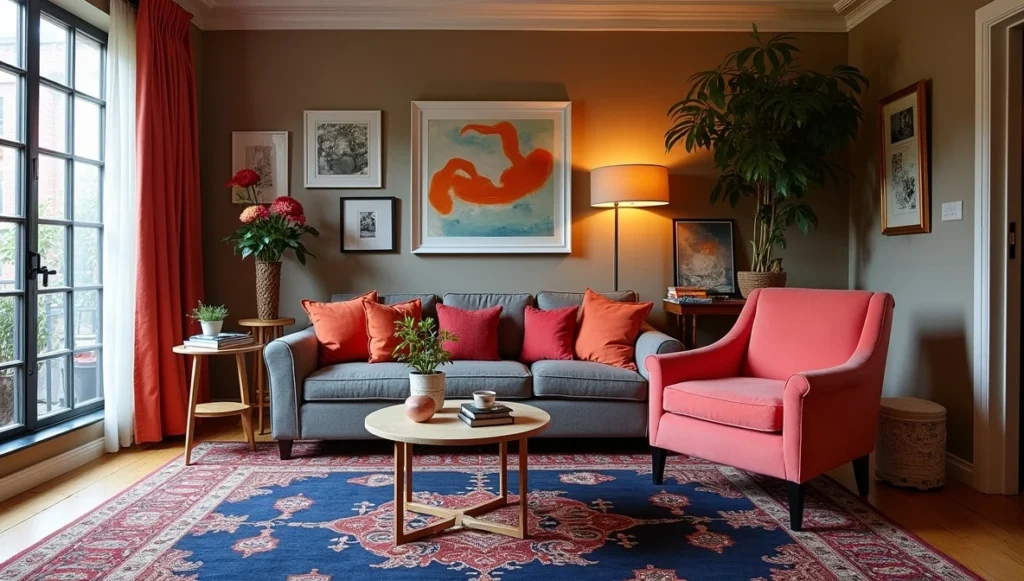
I learned this the hard way: color is either going to save your eclectic room or completely tank it. Pick 2-3 colors that you genuinely love – not what magazines say you should love – and stick with them religiously.
Take my client Sarah’s living room disaster turned triumph. She had this gorgeous coral vintage chair that her husband hated and a navy rug she’d inherited from her mother. Instead of making her choose, we made coral and navy our power couple. Suddenly that mix of modern and traditional pieces started talking to each other instead of arguing.
Texture (The Secret Sauce)
This is where eclectic gets interesting. You want things that feel completely different when you touch them. Smooth leather next to nubby linen – say a smooth leather sofa sitting next to a nubby linen armchair would be an example. Polished marble touching rough jute. Cold metal warming up against soft wool.
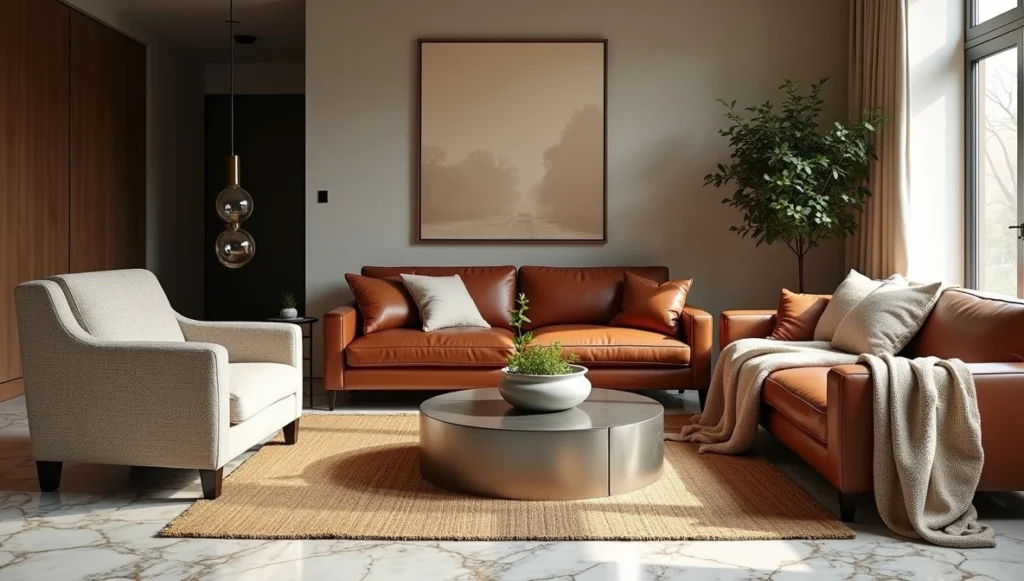
I always tell clients to close their eyes and walk around their room. If everything feels the same under their fingers, we’re missing opportunities. The goal is creating a space that’s as interesting to touch as it is to look at.
Size Matters (More Than You Think)
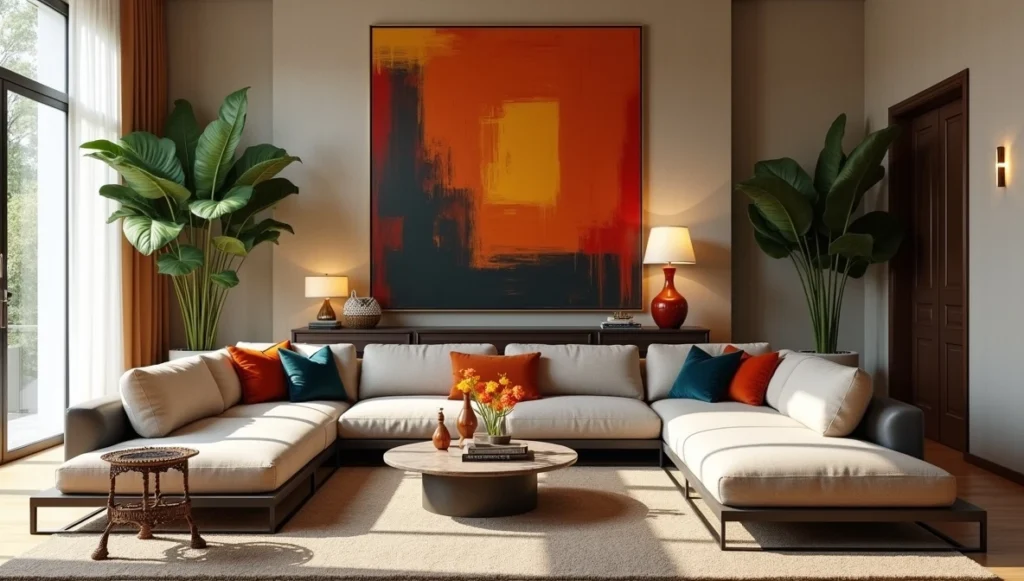
Here’s where people chicken out. They buy everything roughly the same size because it feels safer. Wrong move. You want that tiny vintage side table next to your enormous sectional. You want massive art above delicate furniture. The contrast is what makes people stop and really look at your space instead of just walking through it.
Room by Room: What Actually Works
Living Rooms
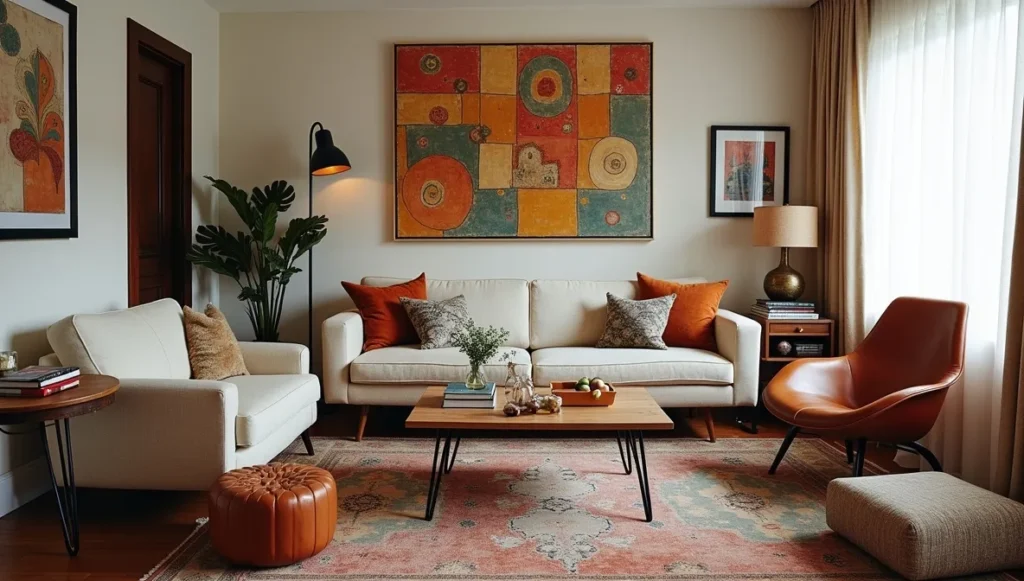
Your living room can handle more personality than you think. I start by finding one piece that makes my client’s heart skip a beat – maybe it’s a vintage rug or some crazy art they picked up on vacation. Then everything else supports that star.
Three different types of seating always works better than matching sets. Right now I’m obsessing over pairing sleek modern sofas with vintage leather chairs and maybe throwing in a funky ottoman. The coffee table is where you can really have fun – I just finished a project where we used an old door on hairpin legs next to the client’s fancy contemporary couch. Sounds weird, looks amazing.
Bedrooms
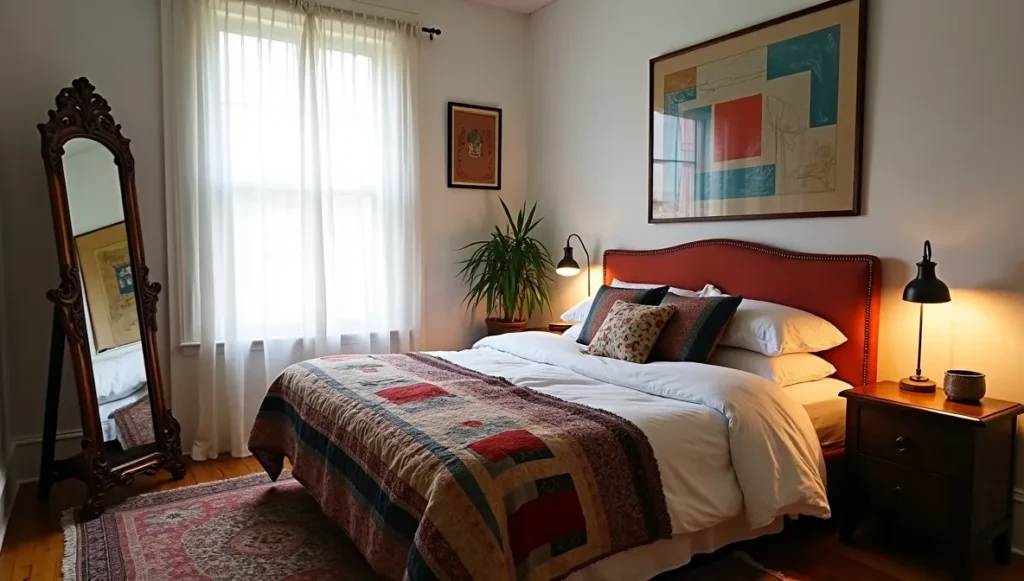
Bedrooms are tricky because you don’t want them feeling like garage sales. I focus on the bedding and textiles mostly. Mix your grandmother’s quilt with those crisp white sheets from Target. Put that ornate mirror you inherited next to a super simple nightstand from IKEA.
One trick I use: pick one dramatic thing for the whole room – maybe it’s a vintage headboard or some bold art – then keep everything else pretty calm. Let that one piece be the diva and everything else can be backup singers.
Kitchens
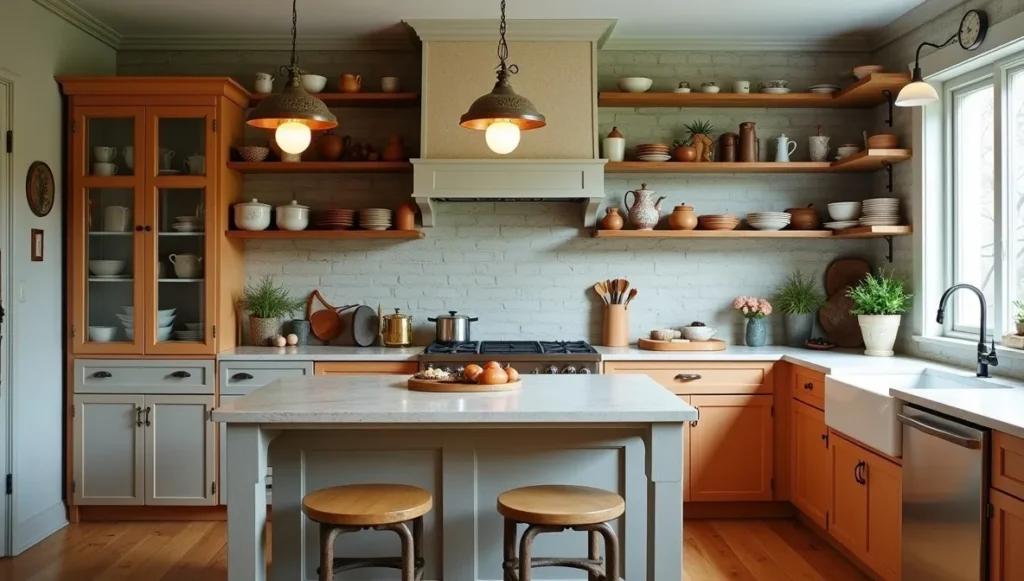
Kitchens are harder because they actually have to work. You can’t just throw pretty things around if they make cooking a nightmare. But there’s still room to play.
I love mixing cabinet styles – maybe keep your main cabinets simple and then add one vintage hutch or a funky island. Open shelves are perfect for showing off that pottery collection, but only put stuff up there that you actually use. Nothing worse than beautiful dishes covered in grease because they’re too close to the stove.
Kids’ Rooms
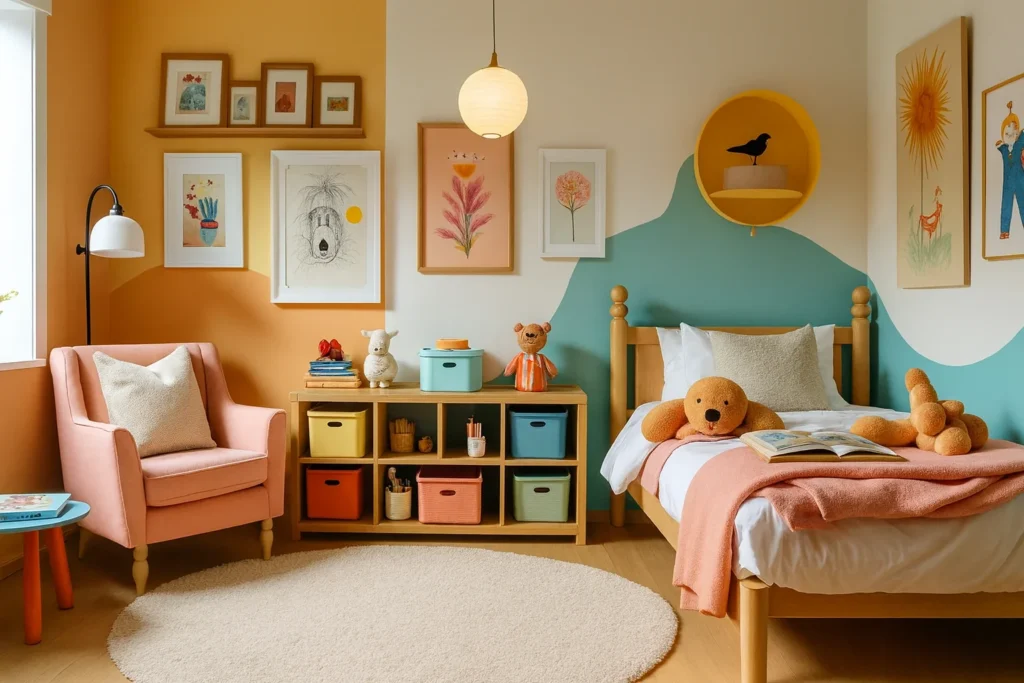
Kids are natural eclectics. They don’t care if their stuffed dinosaur sits next to a modern lamp and some vintage books. They just want spaces that make them happy.
I create different zones for different activities. Reading corner gets the comfy vintage chair (painted with safe paint, obviously). Play area gets the colorful modern storage. And here’s something I always do – frame some of their artwork and hang it next to real art. Shows them their creativity matters just as much as the fancy stuff.
Home Offices
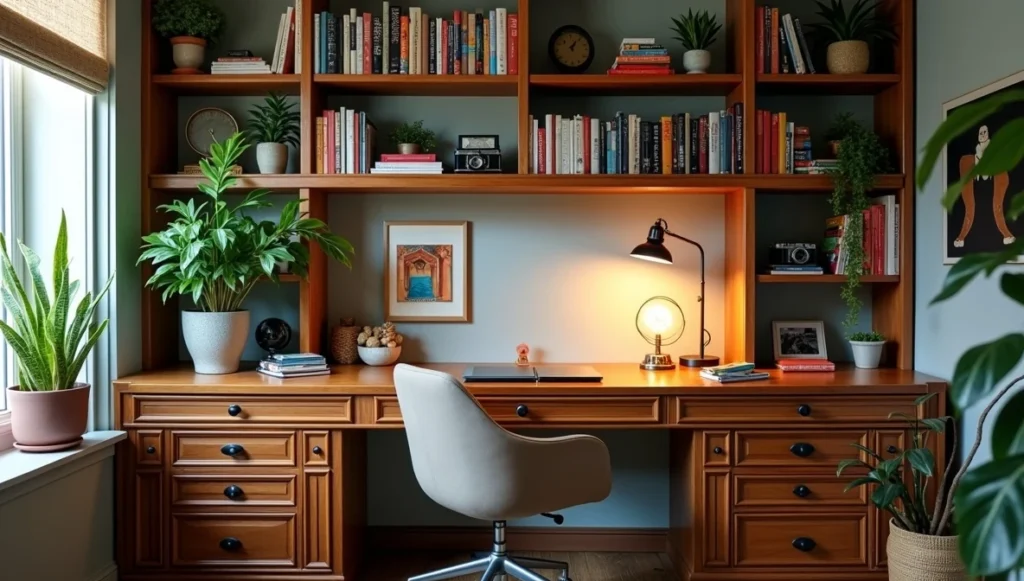
Working from home means your office needs to actually function, not just look good for Zoom calls. But it can still have personality.
Find a desk that makes you want to sit down and get stuff done. Maybe it’s a sleek modern thing, maybe it’s your great-aunt’s old writing desk. Whatever works for you. Then add lighting that actually helps you see what you’re doing, not just mood lighting that looks pretty.
Bookshelves are where you can go a little crazy. Mix your actual work books with weird little objects you’ve collected, some plants, maybe that vintage camera you never use but love looking at. Just don’t let it get so cluttered that you can’t find anything.
Real Talk: Where Most People Mess Up
Turning Their Home Into a Flea Market
I’ve seen it happen. Client falls in love with eclectic style, then proceeds to fill every square inch with “interesting” pieces. Your room needs breathing space. Empty wall sections are not failures – they’re places for your eyes to rest so you can actually appreciate the good stuff.
Forgetting They Actually Live There
That gorgeous antique chair with the broken spring might look amazing, but if no one can sit in it, what’s the point? I don’t care how perfect it looks in photos – if it doesn’t work for your actual life, find something that does.
Getting Cold Feet
This happens more than you’d think. Client sees the perfect bold piece, gets excited, buys it, then panics and surrounds it with the most boring, safe things they can find to “tone it down.” Stop it. If you loved it enough to buy it, love it enough to let it shine.
How to Actually Build This Look
Don’t try to do it all at once. I learned this lesson when I first moved into my own place and tried to create the perfect eclectic living room in one weekend shopping marathon. What a disaster.
Start with one piece you absolutely cannot live without. Maybe it’s your grandmother’s dining table or that crazy ceramic lamp you found at a garage sale. Everything else should play supporting roles to that star.
I keep a running list on my phone of things my clients fall in love with but aren’t ready to commit to yet. Half the time, we end up going back for those pieces months later when they’re ready for the space. Good eclectic rooms take time to develop – they’re not created, they’re curated.
Why People Love This Stuff (The Real Reason)
Eclectic rooms tell stories. Not just any stories – YOUR stories. That bowl from your honeymoon in Greece sitting next to your mom’s vintage lamp next to some art you bought from a local artist last weekend. It’s like your whole life spread out in a way that actually makes sense together.
After doing this for twenty years, I’ve noticed something: the clients who want eclectic spaces are usually the most interesting people. They’ve lived places, done things, collected memories along with objects. Their homes end up feeling like them instead of looking like furniture store showrooms.
Making It All Come Together
Here’s the thing: all this different stuff needs to feel like it belongs in the same house, not like you robbed five different apartments. The trick is finding connections between pieces that aren’t obvious at first glance.
Maybe it’s the wood tones that repeat throughout your space. Maybe it’s a shape that keeps showing up – curves in your mirror, your coffee table, your lamp base. Maybe it’s just that everything feels substantial and well-made, even if it’s from completely different decades.
I take photos of client spaces every few months because it’s easy to lose perspective when you’re living in the space every day. Sometimes you need to step back and see if you’re building something cohesive or just accumulating pretty things.
Bottom Line
Eclectic design isn’t for everyone. It takes confidence and patience, and you have to be okay with some people not getting it. But if you’re drawn to this approach, don’t let anyone talk you out of it.
The best homes I’ve designed aren’t the ones that follow all the rules perfectly. They’re the ones where someone was brave enough to put together things that shouldn’t work but somehow do. Where walking in feels like meeting an interesting person for the first time.
Your space should feel like you live there, not like you’re visiting a furniture showroom. And if that means putting your grandfather’s old desk next to your kid’s modern art next to that weird ceramic thing you bought on vacation, then do it. Just do it thoughtfully, with intention, and with respect for each piece’s story.
Trust your instincts. Take your time. And remember that the most beautiful rooms aren’t created in a weekend – they evolve over years of living, collecting, and discovering what makes you happy to come home.