


- Steampunk Interior Design: What Happens When Victorian Inventors Meet Your Living Room - September 6, 2025
- Tuscan Interior Design: Creating That Effortless Italian Villa Look - September 2, 2025
- The Real Deal on Eclectic Interior Design (From Someone Who’s Actually Done It) - September 1, 2025
Table of Contents
Ever look at photos of Italian villas and get seriously jealous? Those Tuscan interiors have this perfect balance. Cozy but classy. Rustic but polished.
The thing is, real Tuscan style didn’t happen overnight. These homes evolved over generations, with families using whatever materials were locally available. That’s actually the secret to getting this look right.
What Makes Tuscan Design Work
Here’s the thing about original Tuscan homes. Families used whatever they could find locally. Clay tiles, limestone, wood from nearby forests, iron from the local blacksmith. Pure practicality.
But somehow this practical approach created one of the best interior styles ever. Natural stuff ages well. Earth tones never go out of style. Handmade pieces have character.
Getting the Colors Right
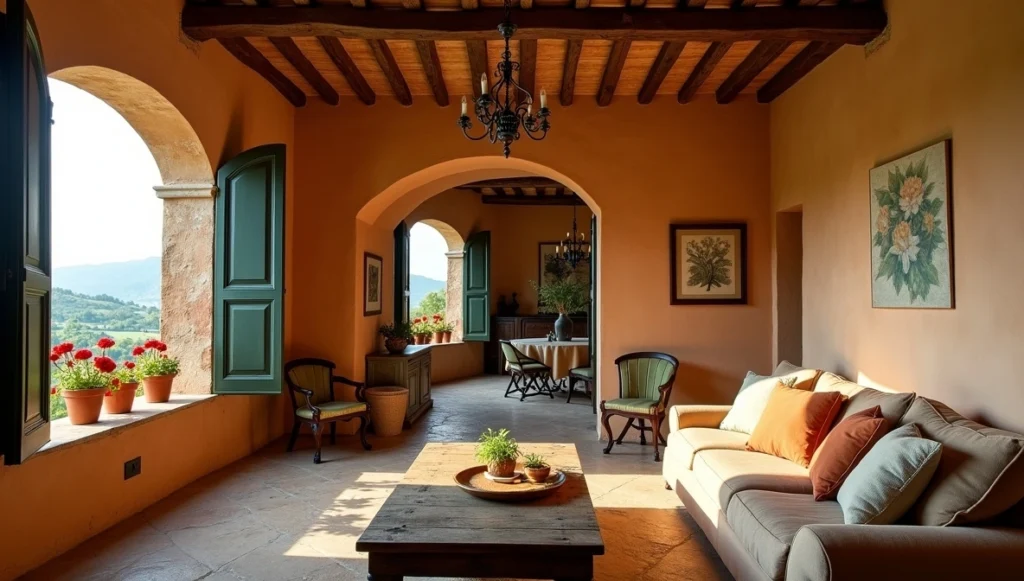
Take a walk through any Tuscan hill town. You’ll see the same warm colors everywhere. Terracotta buildings, cream stone, dark green shutters, red flowers in window boxes.
Your home doesn’t need to be in Italy to use this palette successfully. Warm terracotta works as accent walls. Creamy whites make spaces feel larger while staying warm. Deep olive greens bring life to any room.
Just don’t go overboard. Pick two or three main colors and use them throughout with natural variations. Real Tuscan homes stick to cohesive palettes that feel organic.
Here’s a decades old beautiful home I discovered on my visit to Tuscany.
Smart Material Choices
Natural materials are non-negotiable for authentic Tuscan style, but you don’t need to import everything from Italy.
Travertine and limestone work beautifully for floors and countertops. They’re durable and age well. If natural stone isn’t in the budget, look for porcelain tiles that mimic stone textures convincingly.
Wood should look and feel real. Reclaimed pieces add instant character, but new wood works too if it has visible grain. Skip anything stained to look “rustic” – it usually looks fake.
Iron hardware and light fixtures bring that handmade quality. Hand-forged pieces cost more but last decades and develop beautiful patina over time.
Room by Room Guide
Kitchens
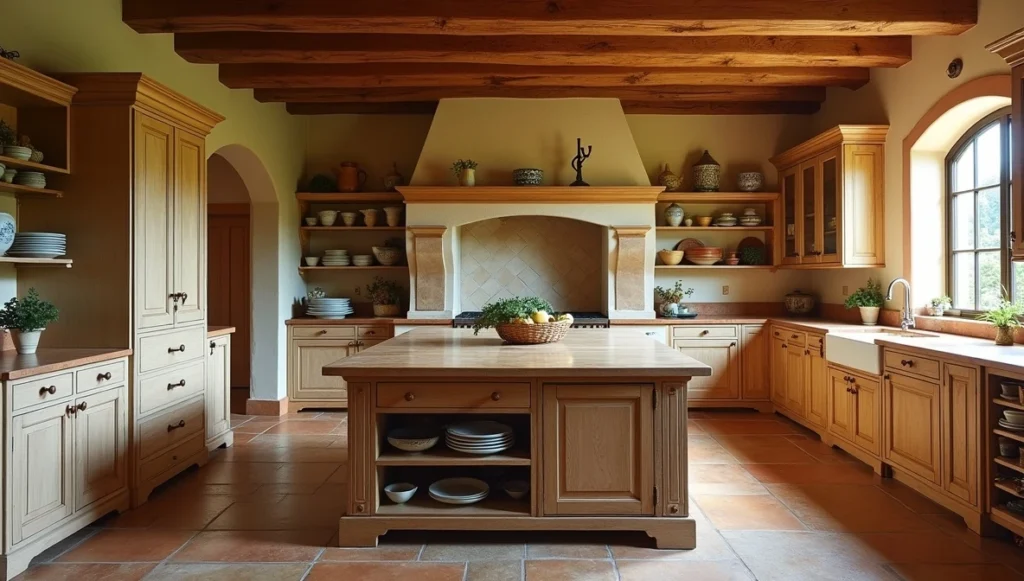
Start with a substantial island or large table where people can gather while you cook. Open shelving shows off dishes and keeps everyday items accessible. A farmhouse sink handles big pots and looks authentic.
Think furniture rather than built-ins for cabinets. Different heights, some open storage, maybe glass-front doors. Avoid perfect rows of identical cabinets.
Living Rooms
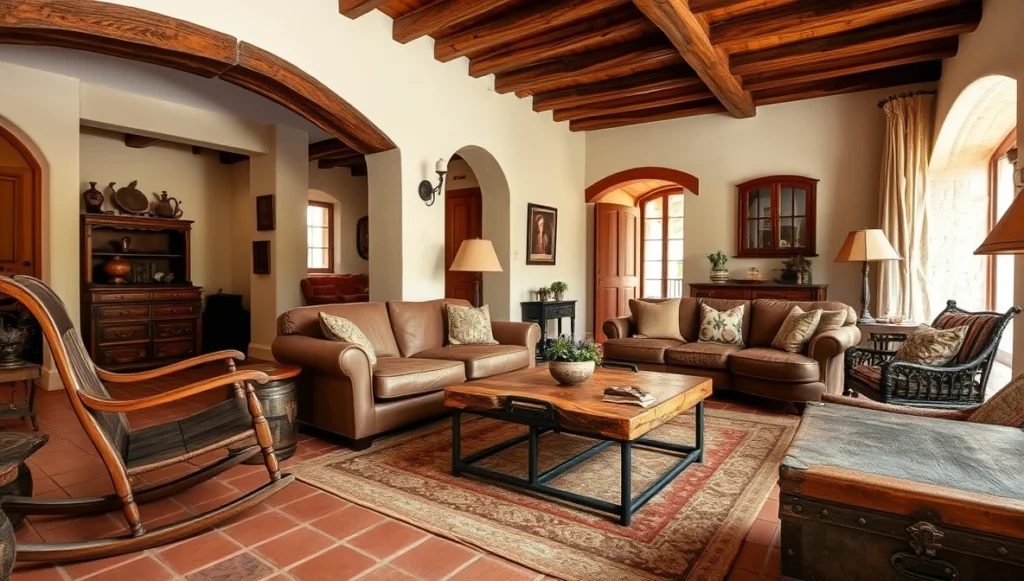
Arrange furniture for conversation, not TV watching. Mix chairs that look like they came from different places. Maybe an antique rocker, a leather reading chair, a wooden bench with cushions.
Coffee tables should be functional. Old wine barrels work great. So do thick wooden slabs on iron bases. Vintage trunks provide storage and surface space.
Bedrooms
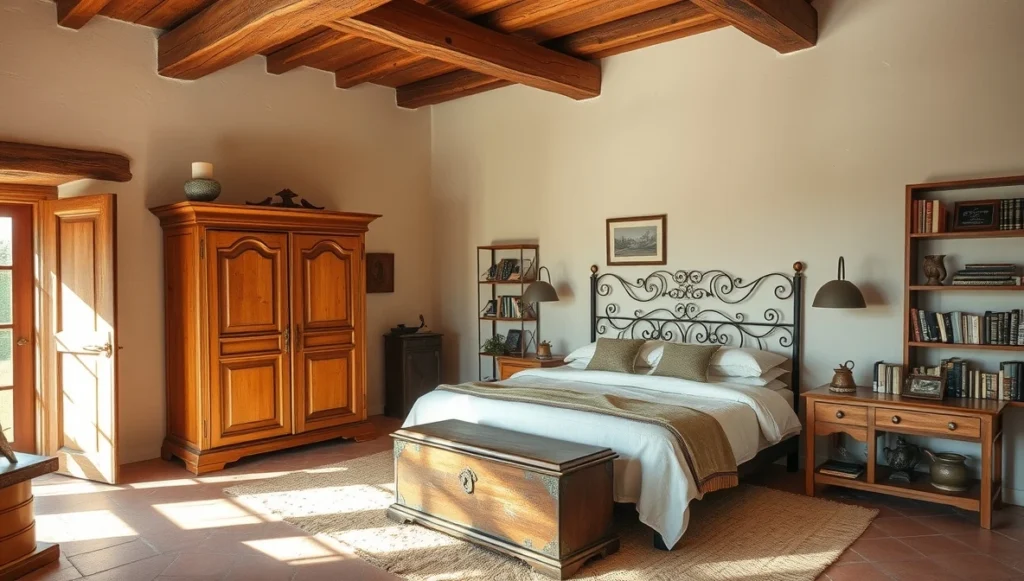
Keep things simple but warm. The bed should dominate with an impressive headboard in wood or iron. Layer natural fiber bedding in earth tones.
Storage feels like furniture, not built-ins. A vintage armoire, wooden chest, open shelving for books and personal items.
Dining Rooms
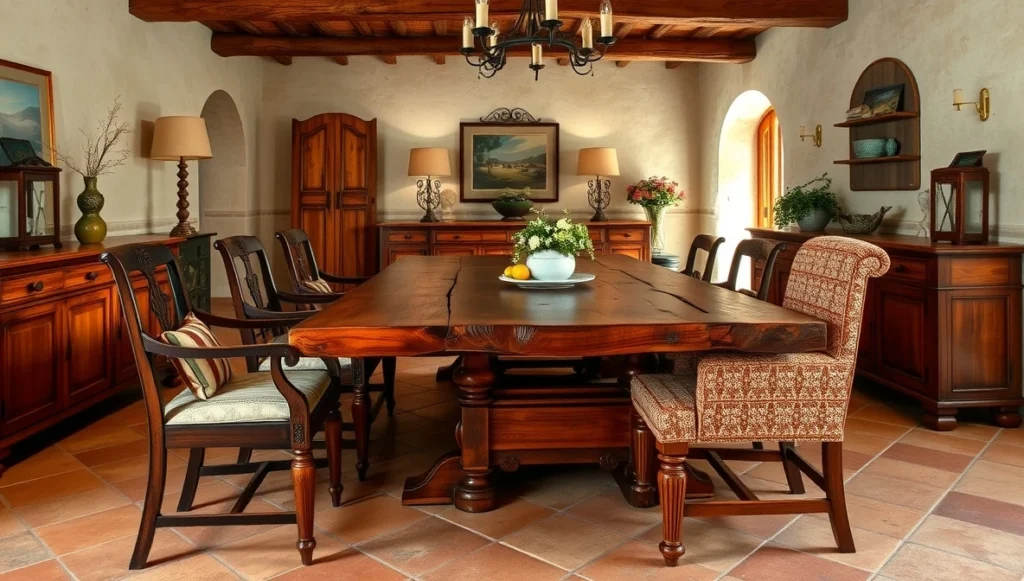
The table makes or breaks the space. Look for solid wood with character – visible grain, natural edge, maybe some gentle wear from years of family meals.
Mix seating styles. Wooden chairs, upholstered benches, maybe one special antique chair. The goal is looking collected over time.
Bathrooms
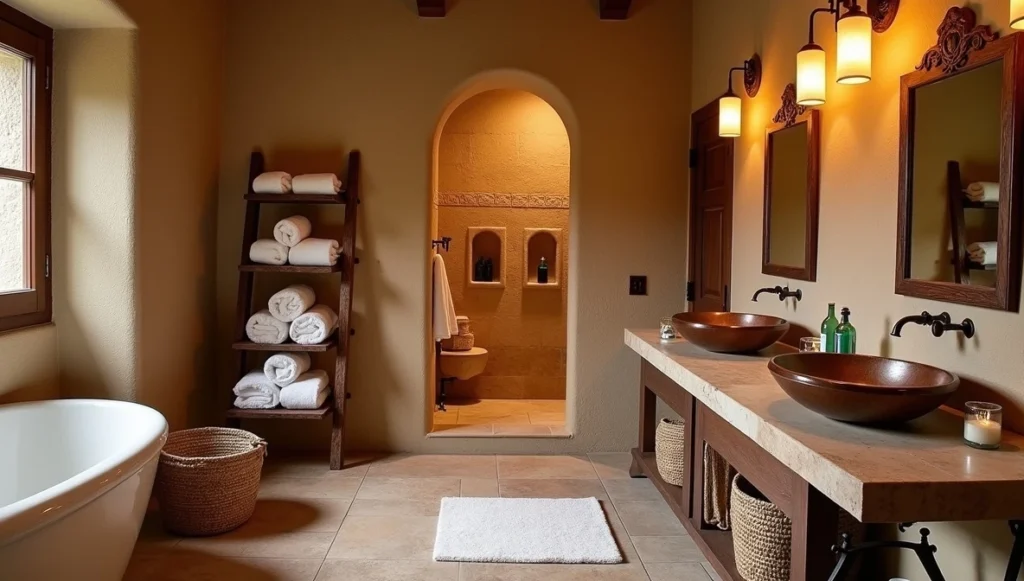
Think spa retreat. Natural stone floors and countertops create landscape connections. Vessel sinks in stone or copper add handmade character.
Keep storage natural and minimal. Wooden ladders for towels, woven baskets for supplies, stone niches in showers.
Home Offices
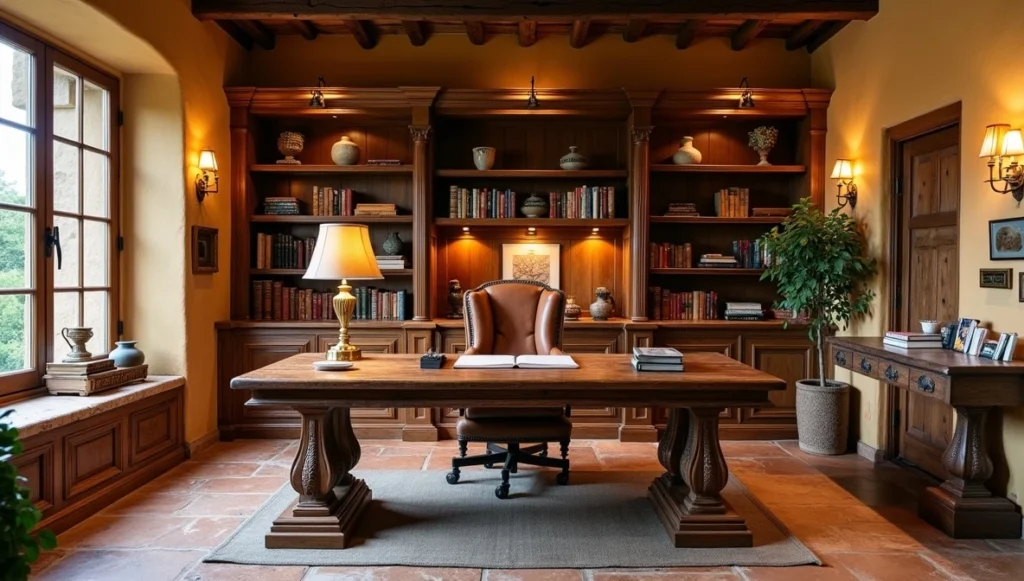
Create a workspace that feels more like a personal study than a corporate cubicle. I designed one office in Sonoma using a massive reclaimed chestnut desk from a 19th-century Italian monastery. The client, a wine writer, said it made her feel connected to centuries of scholars who’d worked at similar tables.
Storage becomes part of the room’s character. Open wooden shelving displays books alongside pottery pieces I’ve collected from Tuscan artisans. Skip modern office chairs for vintage leather pieces that develop beautiful patina. Natural light gets supplemented with brass table lamps I source from Florence metalworkers – they cast warm pools of light perfect for both computer work and handwritten notes.
Lighting That Works
Natural light drives everything. Maximize daylight with sheer curtains and mirrors. Then create warm evening moods with multiple light sources at different levels.
Skip single overhead fixtures. Table lamps, wall sconces, floor lamps, and candles create much more interesting light.
Furniture That Tells Stories
Skip matching furniture sets. Real Tuscan homes look collected over time. Look for solid wood pieces with visible character. Hand-carved details beat machine perfection.
Mix pieces from different sources and time periods while keeping similar materials or proportions. A vintage dining table with new chairs that complement its wood tone works perfectly.
What Not to Do
Don’t turn your home into an Italian restaurant. Grape motifs everywhere and fake aging usually looks fake and doesn’t improve with time.
Real Tuscan homes aren’t museums. They’re functional family spaces that happen to reflect regional traditions. Focus on comfort and natural materials, not theme park decorating.
Don’t expect perfection. Tuscan style celebrates slight irregularities and gentle wear patterns. Embrace imperfection instead of fighting it.
Making It Work on Any Budget
Start with paint colors that establish the warm foundation. Add natural materials through smaller elements like cutting boards, planters, and accessories.
Focus on creating gathering spaces. Rearrange furniture to encourage conversation. Replace harsh lighting with warmer alternatives. Add natural textures through textiles.
Choose things you actually like rather than following decorating rules. Tuscan style works because it reflects the people who live in the space.
Quality pieces cost more initially but last decades. That solid wood dining table will outlast several cheaper alternatives. Hand-forged hardware develops beautiful patina rather than showing wear.
The Bottom Line
Successful Tuscan interiors support a lifestyle that values relationships, comfort, and simple pleasures. Create spaces that encourage lingering over meals. Choose seating that invites long conversations. Display meaningful items rather than generic decorative objects.
The best Tuscan-inspired homes feel lived-in from day one. They welcome daily life and actually improve with age and use. True Tuscan design celebrates the genuine over the fashionable, the meaningful over the trendy.